Category: D2L (Page 2 of 5)

Respondus New Feature

Taking on ChatGPT With a Quiz

Quizzes have always been used in College level courses to assess student knowledge of the course information. However, with the way courses are changing to a more online delivery, it has become a concern that students can use internet resources like ChatGPT, to write, answer, and turn in work that may not be original. Respondus Lockdown Browser can help with these concerns.

When a quiz or a prompt for an essay question is accessed from the Learning Management System, LockDown Browser can prevent students from using unauthorized resources.

Here are the simple steps:

1- Create the quiz in the LMS– in our case this would be D2L

EX: For a short essay, create a quiz and use the “ESSAY” question type.

2- From the Lockdown Browser dashboard in D2L {seen below}

Locate the quiz name and select “SETTINGS”
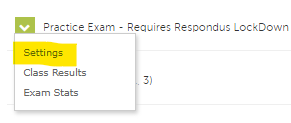
3- Then select “Require Lockdown Browser for this exam” and “Save + Close”
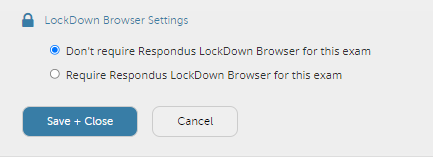
The assessment will now require students to use LockDown Browser.

When students access the quiz from the LMS, LockDown Browser will prevent them from switching applications, capturing screen content, or going elsewhere on the internet (unless the instructor allows it).
Turnitin users the link below may be of interest in helping with checking for AI writing detection capabilities:

AI_writing_FAQS_Apr23_US_G.pdf (pardot.com)

Audio Issue in Bongo Meeting

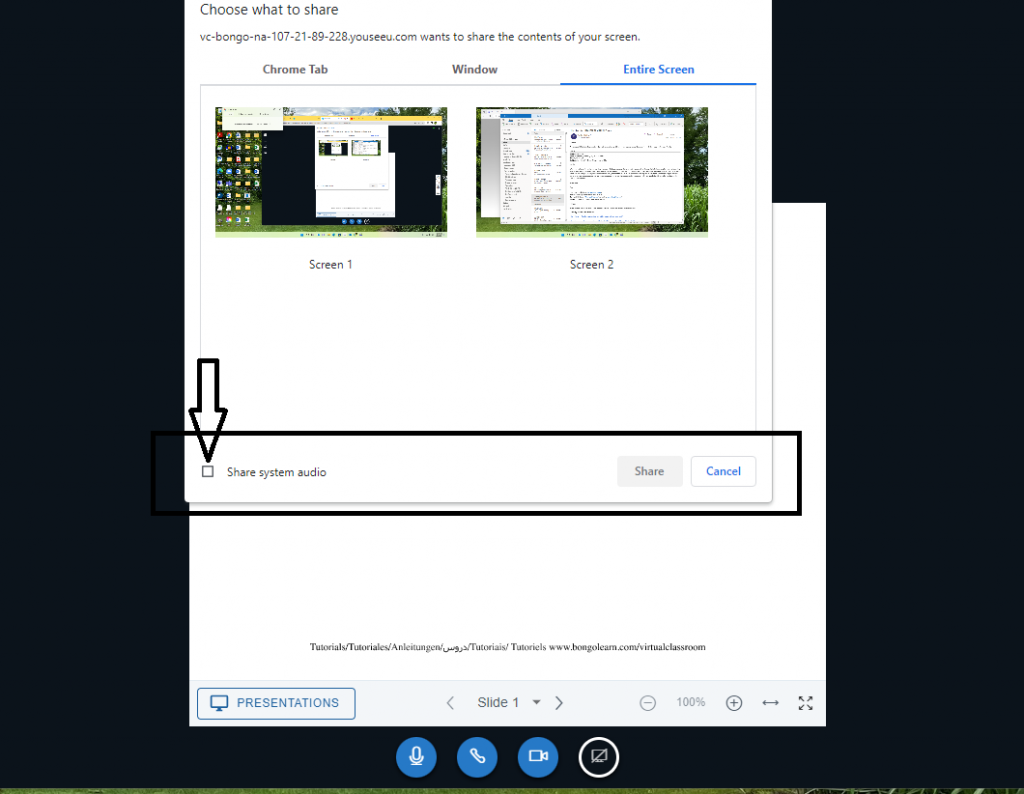
It has come to our attention that sometimes students in the virtual classroom Bongo meeting sessions cannot hear the audio when an instructor is sharing a video in the screen share feature. Examples of these videos being shared are YouTube videos, or possibly web sites with videos that deal with particular instruction from a course. Below is a picture of the box an instructor must check in order for the virtual students to hear the audio with the matching video, when screen sharing presentations.

EX: Screen Share page in Bongo Virtual Classroom

By checking this box, the instructor has now shared the corresponding Audio with Video being played in the Screen Share feature.

Introduction to Quality Matters

What is Quality Matters?

Quality Matters (QM), is an internationally recognized, standards-based program, which offers faculty quality assurance in online and hybrid course design with a focus on continuous improvement.

The Quality Matters program is rubric-based. The 43 standards are specific to higher education, backed by research, and are nationally recognized as a means to improve course design.

South Suburban College has a paid membership with Quality Matters.

Membership includes various resources, research and professional development opportunities.

How other Institutions Use Quality Matters?

Numerous national and local institutions use Quality Matters as a measure for quality courses. See Chicagoland institutions using Quality Matters.

Official course reviews can be completed in two ways:

External:

  • For a fee, the institution pays Quality Matters to review each course independently.​
  • 3 certified QM peer reviewers from other institutions review each course with a turnaround time of 3-6 weeks per course.

Internal:

  • The institution pays for QM peer review certified training for SSC faculty and/or staff.
  • These internal certified QM peer reviewers review courses for quality.

Course (and complete programs) that are Quality Matters certified are listed on the QM website. Institutions can promote these courses as well to demonstrate to their commitment to high quality courses.

How can we leverage SSC’s Quality Matters membership?

  • Create your Quality Matters faculty account. Visit Quality Matters.
  • Select Higher Education Tab.
  • Sign up for free training webinars or professional development sessions.
  • Self-enroll in the free, self-pace course “Elements of Quality Matters“.
  • Remember to send your certification of completion to: ssconline@ssc.edu.

Self-evaluate your own course using SSC’s QM Light checklist.

2025SP Faculty Semester Guide

Updated: January 15, 2025

Got questions? This page is full of resources to the questions folks are asking most frequently about 2025SP. Don’t forget to check for additional resources at https://tl.ssc.edu/ or email ssconline@ssc.edu for additional assistance.

Things You Need to Know Before the Semester Begins

Setting Up Multi-Factor Authentication

Getting Stated with Office 365

Best Practices for Basic D2L Content

Getting Started with Simple Syllabus

Submitting Grade Data to Ellucian Colleague through D2L Brightspace

TL Live Training Calendar

D2L Subscription Training / Brightspace Community

Getting Started with Simulcast/Dual Delivery and/or Lecture Capture

Getting Started with Bongo

Scheduling a Meeting and Launching Bongo

Getting Started with Turnitin

Hiding Cross-listed Sections in D2L

Using Groups and Restrictions to Assign Quizzes or Other Activities

Getting Started with the Promethean Titanium ActivPanel

Getting Started with the Epson Brightlink Projector

Outcomes Assessment – Rubrics at SSC – General Education and Course Level

Getting Started with Respondus for Online Proctoring

D2L Course Copy – Copy Previous Course Content to a New Term Course Shell

Great news! You do not need to recreate your course content every semester. It is easy to roll it over from a previous term.

  • In D2L, enter your current course.
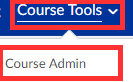
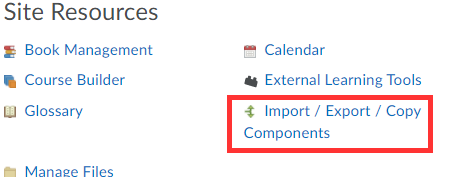
  • Go to Course Tools (or More) →Course Admin →Import/Export/Copy Components.
Course Tools Course Admin
Import/Export
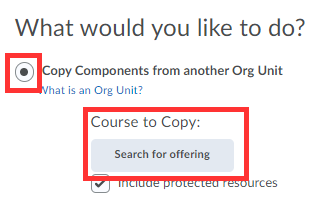
  • Choose “Copy Components from another Org Unit” and select “Search for offering”.
Course to Copy
  • Type in your course ID you want to copy “from” (for example: BIO) and Search.
Course Copy Search
  • From the search list choose the course you want to copy “from”, then select “Add Selected”
Copy Selected Course
  • At the bottom of the screen, you have two options: Copy All Components (entire course) or Select Component (perhaps you just want to copy a few quizzes).
Copy all or selected

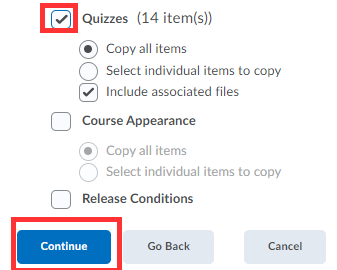
  • If you choose Select Components, select what you’d like to copy then Continue.
  • Copy Select Components

  • Course content should then copy from a previous course to a new course shell.
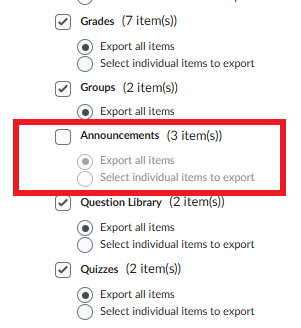
  • Please note Announcements copy over verbatim from course shell to course shell. So it is possible for your announcements to have dated information which can cause confusion for the learner.

    To alleviate this issue, when choosing the ‘Select Components’ option as shown above, simply uncheck the box next to Announcements. This will ensure that old course announcements will not be copied to the new course shell. Shown below:

    Example: ‘Select Components’ list with unchecked box
    « Older posts Newer posts »